
8 Essential Water Skills Every Kiwi Child Should Learn Before Summer
Summer in New Zealand means beach days, backyard pools, lakeside holidays and plenty of opportunities for family adventures around water.
But while many parents measure their child's swimming progress by how far they can swim, there's a bigger question worth asking:
Does your child have the skills to feel confident and respond appropriately when something unexpected happens in the water?
Learning to swim is about more than swimming lengths or mastering strokes. Essential water skills include floating, breath control, kicking, body position, turning around, safe entries and exits, and understanding water hazards.
Together, these skills help children develop greater confidence, control and capability in the water. As summer approaches, here are eight important water skills every Kiwi child should be developing.
Why Swimming Skills Matter More Than Swimming Distance
It's a proud moment when your child swims their first five metres independently. Then ten metres. And eventually, an entire length of the pool!
These are fantastic achievements, but swimming distance is only one measure of progress.
A child might confidently swim across a familiar, heated pool yet struggle when faced with deeper water, unexpected splashing or the need to change direction.
That's because being confident in water isn't the same as being capable in every water situation. Strong swimming foundations involve a combination of physical skills, coordination, confidence and awareness. And importantly, these abilities develop progressively. Children don't need to master everything at once.
1. Floating: Learning to Relax and Stay Supported
Floating is one of the most valuable foundational skills children can learn.

Being comfortable floating on their front and back helps children develop balance, body awareness and confidence in the water. Back floating is particularly useful because it allows the face to remain above the surface while the swimmer rests and breathes. For younger children, this begins with supported floating activities. As their confidence develops, they can gradually learn to maintain their position with less assistance.
Why it matters: Floating helps children understand how their bodies behave in water and provides a foundation for more advanced swimming skills.
Try this: During supervised swimming, practise a supported starfish float. Encourage your child to relax their head back, spread their arms and legs, and breathe calmly. Remember, everyone floats differently. The goal is to develop comfort and control, not force a particular position.
2. Breath Control: Getting Comfortable With Water on the Face
For many children, putting their face in the water is one of the biggest early swimming challenges. And that's perfectly normal. Learning to control breathing begins with simple activities such as blowing bubbles and gradually progresses towards coordinated breathing while swimming.
Children develop skills such as:
Blowing bubbles into the water.
Exhaling while their face is submerged.
Taking a controlled breath when lifting or turning their head.
Becoming comfortable with water splashing their face.
Developing a breathing rhythm during swimming.
Why it matters: Good breath control helps children feel more comfortable in water and supports efficient swimming technique.
Try this: Make bubble-blowing a fun part of bath time or supervised pool play. Start by blowing across the water's surface before gradually progressing to putting the mouth and face into the water. Keep it playful and never force a child's face underwater.
3. Kicking and Body Position: Learning to Move Through Water
Before children can swim confidently, they need to understand how to position and move their bodies through the water. Kicking is one of the first ways young swimmers learn to create movement. Combined with good body position, it helps children develop balance, coordination and the ability to travel through the water more efficiently.
As children progress, they learn to:
Maintain a horizontal body position.
Kick from their hips rather than relying only on their knees.
Keep their body balanced while moving.
Coordinate kicking with arm movements.
Move through the water with increasing control.
Why it matters: Effective kicking and body position form the foundations of swimming. They help children develop propulsion, stability and greater independence in the water.
Try this: Encourage your child to practise gentle, controlled kicking while holding the pool edge or using appropriate support. Focus on steady movement rather than making the
biggest splash!
4. Safe Water Entries: Knowing How to Get In

Jumping into the pool can be one of the most exciting parts of swimming lessons. But learning to enter water safely is just as important as learning to swim once you're in. Different environments require different approaches, and children need to understand that it's not always safe to jump straight in.
Important skills include:
Using pool steps or ladders.
Sitting and sliding into the water.
Entering feet-first when appropriate.
Checking the water depth.
Looking for obstacles and other swimmers.
Waiting for an adult's permission before entering.
Why it matters: Safe entry skills help children develop awareness and reduce the risk of injury.
A simple family rule: Stop, look and check with an adult before getting into the water.
Never dive into unfamiliar or shallow water.
5. Safe Exits: Knowing How to Get Out
Here's a swimming skill that doesn't always get the attention it deserves. Can your child reach the pool edge, hold on and climb out? Learning to exit the water safely is an important part of developing independence.
For younger children, this begins with assisted exits using the pool edge, steps or ladders.
As strength and coordination improve, children can progressively develop the ability to climb out with less assistance.
Why it matters: Being able to reach and use a suitable exit is a practical skill that helps children become more capable in the pool.
Try this: During supervised swimming, encourage your child to practise holding the edge with both hands and climbing out using an appropriate technique. Practising different suitable exit points can help children become more familiar with getting out of the water.
6. Turning Around: Finding the Way Back
Many children first learn to swim towards a parent, instructor or pool wall. But what happens when they need to change direction? Being able to turn around in the water is an important skill that combines body control, balance and swimming coordination.
As children develop, they learn to:
Rotate their body while floating.
Change direction while swimming.
Turn from their front onto their back.
Reorientate themselves in the water.
Swim back towards the pool edge.
Why it matters: Turning skills help children develop control over their movements and the ability to change direction rather than continuing to swim in a straight line.
Try this: During supervised pool time, encourage your child to swim a short, suitable distance towards you, turn around and return to the wall.
It's a simple activity that combines several useful swimming skills.
7. Combining Skills: Building Practical Swimming Capability
Learning individual skills is important. But being able to combine them is where children begin to develop more complete swimming capability. For example, a child might learn to enter the water safely, move into a floating position, begin kicking, turn around and return to the pool edge. Each skill supports the next.
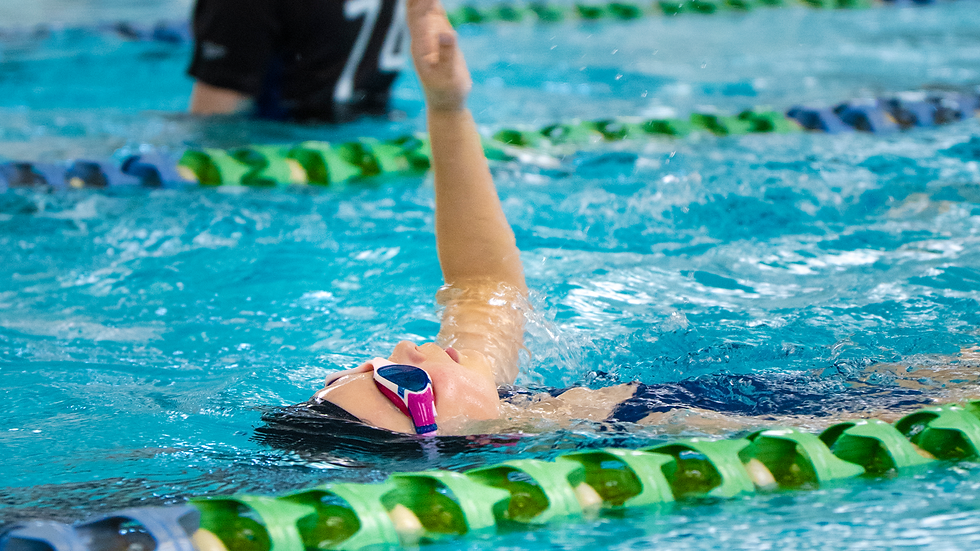
As children progress, combining these movements helps them become more coordinated and comfortable in different swimming situations.
Depending on their stage of development, children can practise sequences involving:
Safe water entry.
Floating and body positioning.
Breath control.
Kicking and swimming movements.
Changing direction.
Returning to the pool edge.
Climbing out safely.
Why it matters: Practising skills together encourages children to apply what they've learned rather than relying on one movement in isolation. At Northern Arena, our approach to learning to swim focuses on building strong foundations and progressively developing swimming ability. It's not simply about reaching the other end of the pool. It's about becoming a more capable, confident swimmer.
These skills contribute to water capability but do not replace specialised water-survival training or active adult supervision.
8. Water Awareness: Understanding That Every Environment Is Different
New Zealand is surrounded by incredible places to enjoy the water. From the beaches of the Hibiscus Coast to lakes, rivers, holiday parks and backyard pools, water is a big part of growing up Kiwi. But not all water environments are the same.
A child who swims confidently in a pool isn't automatically prepared for swimming at the beach.
Open water can introduce additional challenges, including:
Waves and changing water conditions.
Rip currents and moving water.
Cold temperatures.
Uneven or slippery surfaces.
Poor visibility.
Sudden changes in depth.
Greater distances from a safe exit.
Understanding these differences is an essential part of water safety education.
Why it matters: Children need to recognise that their swimming ability has limits and that water conditions can change quickly.
Try this: Before heading to the beach, talk with your child about where it's safe to swim, what the red and yellow flags mean and why they must stay close to their supervising adult.
At patrolled beaches, always swim between the flags and follow lifeguard instructions.
For boating and other activities where lifejackets are required or recommended, make sure children wear correctly fitted lifejackets.
How Do You Know If Your Child Is Developing These Water Skills?
Every child learns at their own pace. Some children are naturally confident in the water but need more time to develop coordination. Others may develop strong swimming movements while still building confidence with floating or putting their face underwater. Neither situation is unusual. Rather than focusing entirely on swimming distance or age, consider the range of skills your child is developing.
A Simple Water Skills Checklist for Parents
Can your child:
Put their face in the water and blow bubbles?
Float on their front or back with an appropriate level of support or independence?
Maintain a balanced body position while kicking?
Move through the water using coordinated movements?
Enter the pool safely?
Turn around and change direction?
Reach the pool edge and climb out with an appropriate level of assistance?
Understand that beaches, rivers and lakes present different risks?
Not ticking every box doesn't mean your child is falling behind. It simply highlights skills they can continue developing through swimming lessons and supervised practice. And even when children become capable swimmers, adult supervision remains essential.
Common Water Safety Myths Parents Should Know
Myth: My child can swim 25 metres, so they're safe in the water.
Fact: Swimming distance is an important milestone, but it doesn't guarantee safety. Floating, breath control, orientation, endurance and awareness are also valuable skills.
Myth: Confident children are safer swimmers.
Fact: Confidence is important, but it needs to be supported by actual swimming ability and an understanding of risks. Sometimes confident children may overestimate what they can manage.
Myth: Once children learn to swim, they don't need lessons anymore.
Fact: Swimming skills continue developing through practice. Technique, coordination, endurance and more advanced abilities all benefit from ongoing learning.
Myth: If my child can swim in a pool, they'll be fine at the beach.
Fact: Beaches, rivers and lakes introduce conditions that don't exist in a controlled swimming pool. Open-water awareness and close supervision are essential.
Northern Arena's Approach: Building Skills That Last
At Northern Arena, we believe learning to swim is about much more than getting from one end of the pool to the other. It's about helping children develop the confidence, coordination and swimming skills they can build on throughout their lives. Our learn-to-swim programme follows a progressive approach, allowing children to develop strong foundations before moving towards more advanced swimming skills. We also place great value on consistency.
Skills such as floating, breath control, kicking and body positioning become more familiar through repetition. Regular lessons give children opportunities to practise, refine and build on what they've already learned. And while every child's swimming journey is different, the goal remains the same: helping them become stronger, more confident and more capable swimmers.
Frequently Asked Questions About Children's Water Skills
What are the most important swimming skills for children?
Important foundational skills include floating, breath control, kicking, body positioning, turning around and safe water entries and exits. Together, these help children develop confidence, coordination and practical swimming ability.
At what age should children start learning water skills?
Children can begin developing water familiarity from infancy through age-appropriate, supervised activities. As they grow, they progressively develop more independent swimming movements and advanced skills.
Is swimming 25 metres enough to be considered a safe swimmer?
No. Swimming 25 metres is a great achievement, but it doesn't guarantee safety. Children also need a range of other swimming skills, an understanding of water hazards and appropriate adult supervision.
How can parents help children practise swimming skills?
Supervised pool play, bubble-blowing games, supported floating and practising safe entries and exits can help reinforce skills learned during lessons. Activities should always be suitable for the child's age and ability.
Should children continue swimming lessons throughout the year?
Regular lessons provide opportunities to reinforce skills and build confidence. Long breaks can interrupt learning consistency, particularly for children still developing their swimming foundations.
Do swimming lessons make children safe around water?
Swimming lessons help children develop valuable skills, but no child is completely safe around water. Active adult supervision, appropriate barriers, safe behaviour and suitable safety equipment remain essential.
Get Your Child Summer-Ready With Northern Arena
Summer should be about making memories. Whether it's building sandcastles at Ōrewa Beach, swimming at the local pool or enjoying a family holiday by the lake, developing swimming skills can help children enjoy their time around water with greater confidence.
And while sunscreen, hats and towels are all part of getting summer-ready, it's worth thinking about your child's swimming skills too.
The best time to build water confidence and capability is before summer arrives.
At Northern Arena, our learn-to-swim programmes support children at different ages and stages, from their earliest water experiences through to more advanced swimming.
Not sure which level is right for your child? Book a free swimming assessment and let our team help identify the most suitable starting point.
Because learning to swim isn't just about swimming further. It's about building skills for life.
Water safety reminder: Always actively supervise children in and around water. Young children and those who are not competent swimmers need an adult within immediate reach. Swimming lessons help develop capability but never make a child drown-proof.


Failure is a natural part of the Stickman Hook experience, especially when players encounter unfamiliar obstacle arrangements. Missing an attachment point or releasing at the wrong moment can interrupt an otherwise promising run. However, these mistakes also reveal useful information about the game's movement system.
I played BlockBlast while waiting for a local instrument maker to finish fitting new strings to a handmade ukulele. He tuned each string carefully and played a few chords to check the sound.